
ChatGPT is already marketing your event: what we learned at Event Tech Live 2026
By Jon Monk
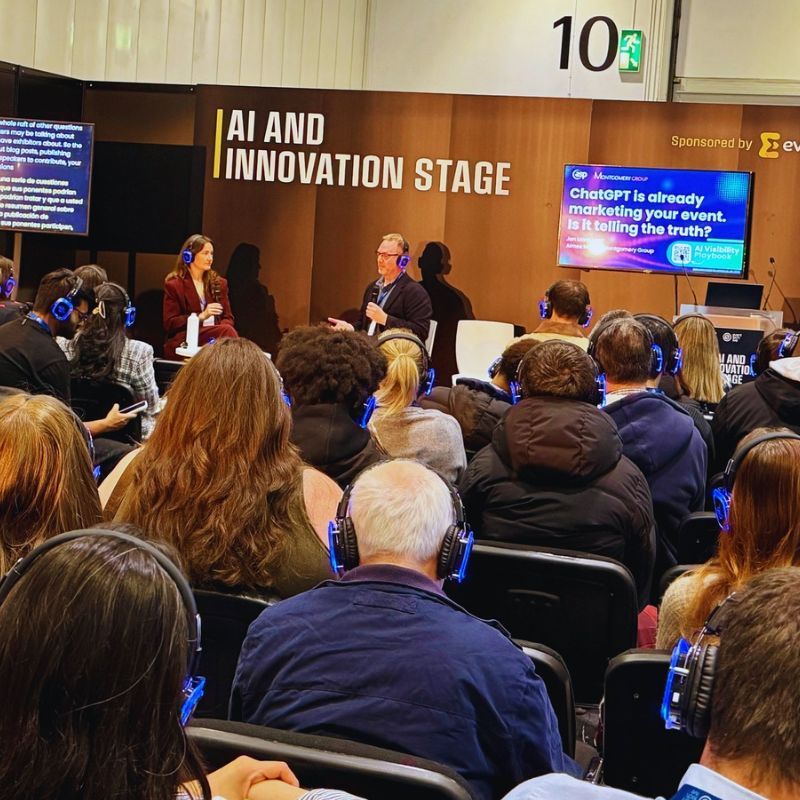
At Event Tech Live 2026, I was joined on the AI & Innovation Stage by Aimee Moore, Head of Marketing at Montgomery Group, whose portfolio covers the seven co-located events that make up Food, Drink & Hospitality Week. Together we looked at what ChatGPT and other AI tools are telling people about events, and what organisers can do when the answer isn't the one they want.
We started with a show of hands. A few people in the room had asked AI about their own event, and some had found it getting things wrong. Far fewer had tried asking the questions their buyers would ask. That gap shaped most of the conversation.
1. Check what AI says about your event, and keep checking
We asked the audience to try it live. Each person asked ChatGPT about their neighbour's event: what it is, where and when it takes place, and who it's for. Most of the basics came back correct, which was good to see.
But accurate today doesn't mean accurate all year. The riskiest time is the roll-over after an event. The homepage gets the new dates, but hundreds of other pages, or a page title tucked away somewhere, still carry last year's. Update your website as soon as possible after each edition, and check again.
Top tip: when you test, use a temporary chat in ChatGPT and switch off personalised results. Otherwise it may draw on your own history and tell you what it thinks you want to hear.
2. Ask the questions your buyers ask, not the ones you'd askAimee's team found this out first-hand. When they asked whether a food buyer should attend IFE, one of Aimee's events, ChatGPT said they could, but that it wasn't strictly necessary. Not the answer any organiser wants.
So the team stepped back and looked at what buyers actually ask before they get anywhere near an event. People rarely start with the solution. They start with a problem, such as where to find new products for a particular market, or how to get a product listed with a major supermarket. The team then published articles that answered those questions clearly and made it obvious how the event helps.
When they checked again, the answer had changed. AI now recommended attending IFE as the place to find those products.
3. Use what you know about your audience, then back it up with dataThe best source of buyer questions is still real people: your sales team, enquiry emails and conversations with visitors and exhibitors.
AI tools don't share what people search for, so for a wider view, Google is still the best guide. Search volumes show how popular a topic is, even if people now phrase their questions differently. If you run paid search campaigns, the topics and ads that perform best are another useful signal.
4. Reuse the content you already haveNot every team has someone writing articles every week, and Aimee was honest that it can be a big ask. Her advice: lean on what you already create. Her team sends regular emails to exhibitors, full of carefully written reasons to book a stand and details of who attends. Once sent, that content is usually never seen again. Turning it into articles on the website lets it keep working all year.
The same goes for exhibitor, sponsor and speaker content. Experts talking about trends and challenges often contain exactly the answers your audience is looking for.
Too many event websites are cleared out after each edition, with speakers and content deleted, so they take three steps forward and three steps back every year. Keep growing the site over time instead. It becomes a year-round source of answers, not just a page about this year's event.
5. Not everything needs to be in the main menuA common worry is that more content will make a website feel cluttered. It doesn't have to. Think of your site like a book, with chapters, sub-chapters and an index. Articles can sit in a knowledge or blog section without appearing in the main menu.
The rule is simple: every page needs to be linked from somewhere, whether that's the footer, a hub page or a "read more" link. And make sure your sitemap is submitted to Google.
6. Pick a few things, then measure what worksWith AI tools changing every week, it's tempting to try everything. Aimee's approach is to choose one or two priorities, give them time and track the results properly before deciding whether to keep going or change course. Her team has made reporting a priority for exactly that reason.
Measuring AI visibility is still developing. Microsoft Bing now offers AI reporting, and Google Search Console has started to show AI visibility data. Both give a useful indication. But the measure that matters most is still in Google Analytics: how many people AI tools send to your website, and how many of them register or enquire. One client I'm working with now gets around 10% of its website traffic from ChatGPT, a share that has grown significantly over the past year.
It's also worth looking at the sources AI cites in its answers. If your website isn't one of them, write a better answer to that question on the right page of your site. Once you're the source, you have more say over what AI says about your event.
7. Make the most of your exhibitors and speakersAn audience question asked what AI trusts more: what organisers say, what exhibitors and visitors say, or what the trade press says. The answer is that third-party sources carry real weight, especially trusted ones.
This is where events have a big advantage. Exhibitors and speakers want to talk about the event, and they do it publicly, including on LinkedIn. Encourage them to share, keep partner sites up to date with accurate event details, and collect testimonials with a name, job title and company.
Three quick wins to start with- Ask ChatGPT about your event, and fix anything that's wrong.
- Ask it the questions your buyers ask, and see whether your event comes up.
- Add "ChatGPT or another AI tool" as an option to your "How did you hear about us?" question.
- Marketing hasn't changed, but how people find you has
As Aimee put it, the fundamentals are the same. You still need a good website, good content and good social. What's different is how people get to it. Plan for that step, and keep doing the marketing that already works.
Huge thanks to Aimee for joining me, to Event Tech Live for hosting us, and to everyone who came along and asked such good questions.
Watch the full session on demand
Keen to find out more?
Our AI Visibility & Event Discoverability Playbook sets out 10 practical steps to help your event get found, from keeping content that already performs to adding FAQs to your key pages.